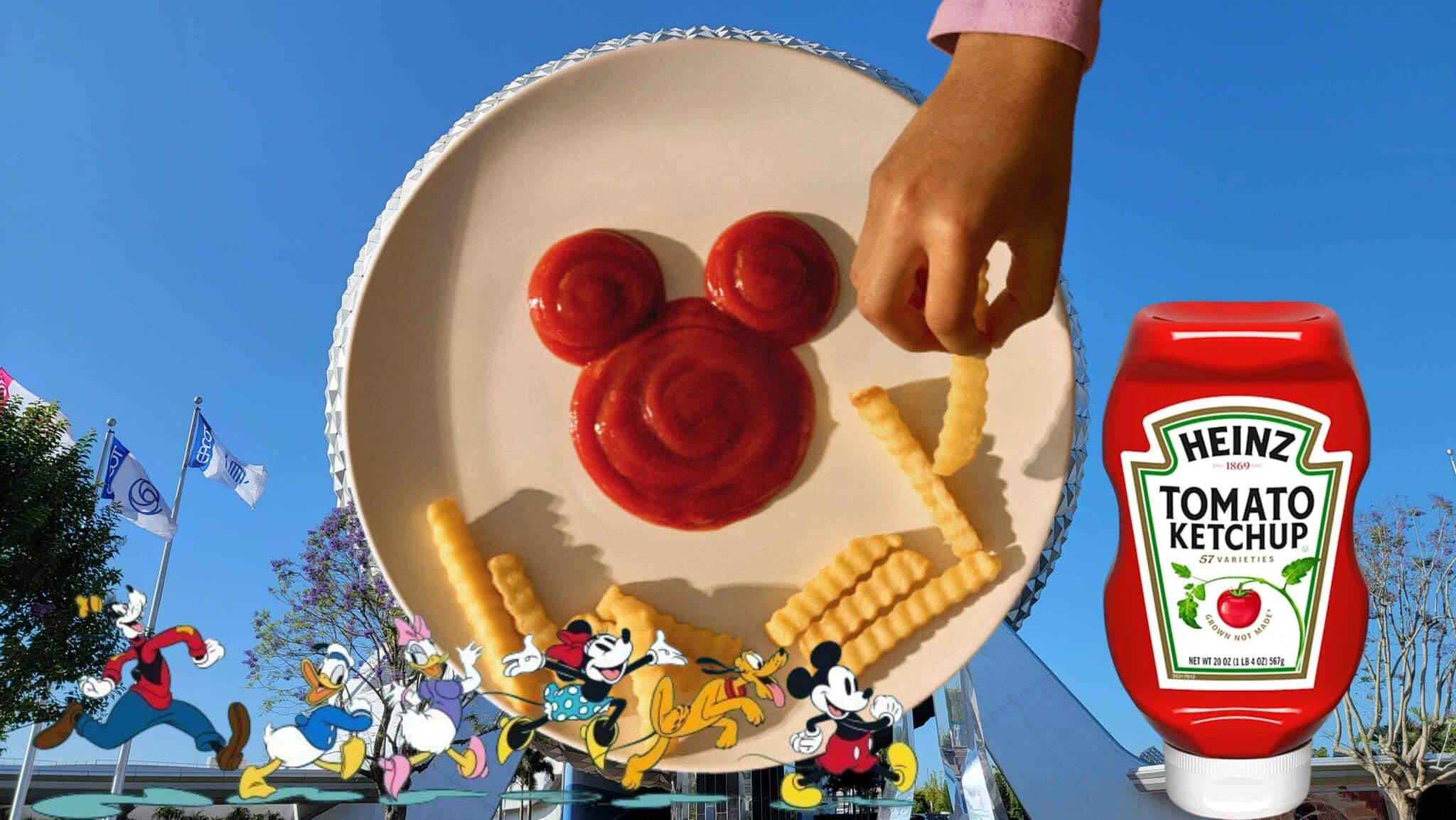

Sometime soon, the ketchup you squeeze onto fries at Magic Kingdom will officially be Heinz. That is the headline, stripped of the press-release language. The Walt Disney Company and Kraft Heinz have signed a multiyear "strategic alliance" that spans movies, TV, cruises and the theme parks, and the part that touches your day is simple: new menu items, new condiment stations, and prime placement for ten Kraft Heinz brands across Walt Disney World and Disneyland.
Whether that changes anything about your trip is a fair question. Mostly it does not. But there are a couple of small, real things worth knowing, and a bit of context that helps explain why a deal like this is happening now.
What's actually in the deal
The terms weren't disclosed, but the shape of it is clear. Ten Kraft Heinz brands get featured spots in the parks and on North American Disney cruises. The named ones include Heinz, Philadelphia cream cheese, and Kraft Mac & Cheese. Disney's Todd Kaplan counterpart at Kraft Heinz talked about "experiential activations" and "mealtime moments," which is marketing for: expect these brands to show up on menus and at self-serve stations, and expect a few new items built around them.
Stripped of the jargon, here is what a guest will plausibly notice:
- Branded condiments at the ketchup-and-mustard stations instead of generic pumps
- A handful of new menu items tied to Kraft Heinz products, likely mac and cheese variations and cream-cheese-based snacks
- Cross-promotion you'll see more in ads and on packaging than at the parks themselves
That's it. Nobody is rebuilding a land around cream cheese. This is a supplier and marketing arrangement dressed up as a partnership, which is entirely normal for how large parks source food.
Does branded ketchup matter to you?
Honestly, no. If you were choosing a park based on condiment quality, this is your lucky decade, but that isn't a real person. The one thing worth watching is whether new branded menu items come with new prices. Disney park food already runs high, and "limited-time collaboration" items have a habit of costing more than the thing they replaced. If a new Kraft Mac & Cheese bowl shows up at fifteen dollars where a simpler side used to be nine, that is the deal reaching your wallet. Watch the price, not the logo.
Why Disney is doing this now
The timing tells you more than the ketchup does. Disney's parks business is running hot. Domestic parks and cruises revenue rose 11 percent in the most recent quarter, and analysts have started treating Disney's parks strength as a genuine bright spot against a gloomier picture at Universal. When your parks are printing money, brand partners want in, and a deal like this is easy revenue that costs Disney very little.
So read this less as "Disney needed a food partner" and more as "Disney has leverage and is monetizing it." A company with packed parks can charge a legacy brand like Heinz for the privilege of being the official ketchup. For guests, that's neutral to slightly negative: it's one more commercial layer, and commercial layers rarely make the sandwich cheaper.
The bigger picture: a quiet stretch for new rides
Here's the context that actually affects your planning. This has not been a summer of big openings. There's been a sprinkling of reopenings and re-imaginings, but the marquee projects are still behind plywood. Disney's Hollywood Studios is getting a multi-pronged Magic of Disney Animation addition in mid-September, and that's the closest thing to a headline attraction on the near horizon.
Meanwhile across town, Universal has a genuine spectacle rising: Fast & Furious — Hollywood Drift, replacing the old Rip Ride Rockit, with a spike maneuver that tops out at 170 feet and juts over CityWalk. Islands of Adventure is clearing the old Lost Continent for something not yet announced, and Jurassic Park River Adventure is walled off for refurbishment until a November reopening.
Why does this matter for a food-branding story? Because when a park cycle is light on new rides, the news you hear tends to be about deals, menus and marketing. A ketchup partnership makes headlines partly because there isn't a new roller coaster to talk about. If you're planning a trip in the next few months, temper your expectations for something brand-new to ride, especially at Disney, and plan your day around the attractions that are already open and already excellent.
What we'd do with this information
If you're building a park day, the Kraft Heinz deal shouldn't move a single decision. Don't reroute to chase a branded snack. Don't budget extra for it. Do the ordinary smart things instead:
- Eat at off-peak times. The 11:30-to-1:30 lunch crush wastes stamina you'd rather spend on rides, and it does so regardless of whose ketchup is at the station.
- Treat new "collaboration" items with mild suspicion on price. Try one if it appeals, but don't assume limited-time means good value.
- If you have a mixed-age group, remember that quick-service mac and cheese is a reliable win with younger kids and a picky-eater safety net. That was true before the deal and it's true after.
For a family watching the budget, the practical takeaway is small but real: branded food is a marketing win for Disney, not a value win for you. Nothing in this arrangement was designed to save you money.
The line worth remembering
A park announcement about condiments feels trivial, and mostly it is. But it's also a tidy little signal of where Disney sits right now: strong enough at the gate that a century-old food giant wants its logos inside, and quiet enough on new attractions that a supplier deal counts as news.
So enjoy the fact that the ketchup will be Heinz if that pleases you. Just don't confuse a marketing alliance with a reason to visit, and keep one eye on Universal, where the thing rising over CityWalk is the news that will actually change which park is worth your afternoon.
When a roller coaster is the headline again, that's the story we'll be planning trips around. For now, order the mac and cheese if the kids want it, and spend your energy on the queue that matters.