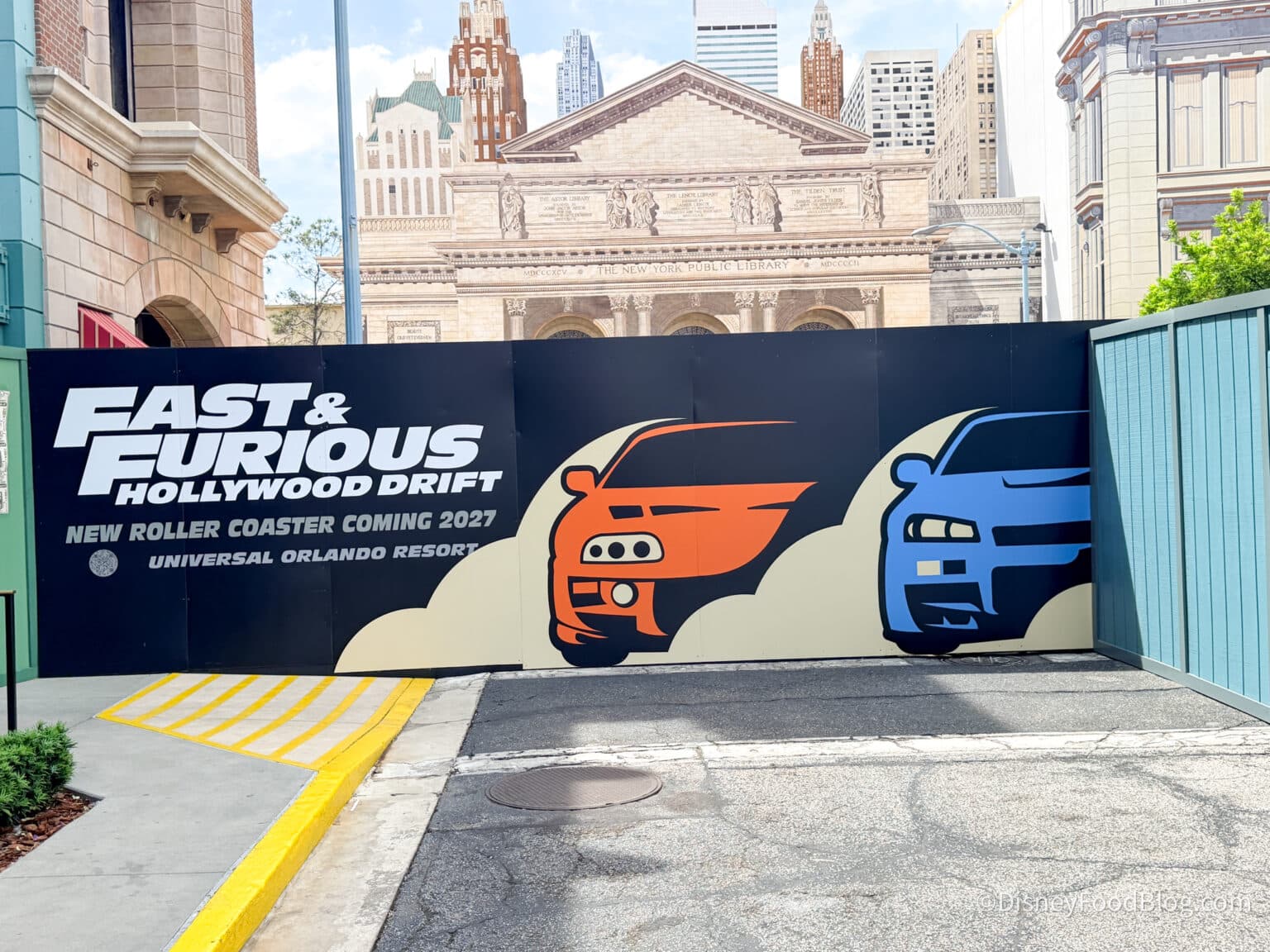

A 170-foot steel spike now juts over Universal CityWalk, taller than SeaWorld's Ice Breaker by a comfortable 77 feet, and it is the most honest thing happening in Orlando this summer. Everything else worth watching is hidden behind plywood, scrim, and construction fence — a season defined less by ribbon-cuttings than by the promise of them. The theme park capital of the world spent the summer of 2026 mostly building, and the shape of what it is building tells you a great deal about where both giants think the business is heading.
The slowest summer in years, and why that's not an accident
Let's name the disappointment first: this was not a summer stacked with headline openings. As the Orlando Sentinel put it in late July, fans were "mostly forced to dream of projects still in the works." Disney's Hollywood Studios has the multi-pronged Magic of Disney Animation attractions arriving in mid-September, and beyond that the calendar thins out fast into reopenings and re-imaginings.
That lull is worth reading as a signal rather than a slump. Universal poured its 2025 energy into opening Epic Universe, an entire fourth gate — the kind of generational swing that reorders a resort's center of gravity and, inevitably, empties the pipeline behind it for a year or two. Disney, meanwhile, is deep into a reinvestment cycle that produces very little you can put on a poster. When both operators are simultaneously between their marquee moments, you get exactly this: a summer of walls.
Fast & Furious, and the risk of trading a coaster for a coaster
The most visible work in town sits where Hollywood Rip Ride Rockit used to be. Rockit closed last August and was dismantled, and rising in its footprint is Fast & Furious — Hollywood Drift, a roller coaster whose spike maneuver already dominates the skyline outside Universal Studios Florida. In the back of the park, near the library facade, a loading station has taken shape, and track has recently gone in near the Music Plaza stage.
Here is where we'd raise an eyebrow. Rockit was a launched coaster with a genuine thrill profile and a prime placement inside the park's front gate. Replacing one coaster with another coaster is not the same as adding capacity — it is a lateral move, and lateral moves have to justify themselves on quality alone. The signals from the West Coast are not entirely reassuring: a similar-but-different ride sharing the same name entered soft-opening mode at Universal Studios Hollywood, where Universal reportedly put the brakes on the ride sooner than expected. Onboard video of spinning cars has circulated, and it will intrigue Orlando fans as much as it worries them. A spinning gimmick can be a delight or a gimmick; the difference is in the execution, and Universal is asking guests to trust it will land the second time.
The 170-foot spike is a statement of ambition. Whether the ride underneath it earns that statement is the open question of 2026.
The land nobody will name
The most intriguing plywood in Orlando surrounds a demolition, not a construction site. At Islands of Adventure, the old Lost Continent — once home to opening-day staples like Poseidon's Fury and The Eighth Voyage of Sindbad — is being erased piece by piece, from the Enchanted Fountain to the enormous stone feet in front of the Poseidon building.
Universal confirmed back in September 2025 that something new is coming to the site. Nearly a year later, that something remains unannounced, and the vacuum has predictably filled with contradictory rumors. We won't traffic in those. What we will say is that the pattern is deliberate: clear the land, let anticipation build, control the announcement. It is the same playbook that governed the years-long tease before Epic Universe. The silence is a marketing instrument, and Universal knows exactly how loud it is.
Elsewhere in the park, walls around Jurassic Park River Adventure mark a scheduled refurbishment that began in January and is slated to reopen in November — a reminder that even water rides in Florida need their bones checked. Outside the gates, work has begun on Cat 1, the resort's coming water park, extending Universal's footprint well beyond the theme-park perimeter.
Disney's invisible investment
While Universal builds vertically and loudly, Disney has spent the year on something almost impossible to photograph: the slow, expensive maintenance of things that already work. At a recent media panel, Walt Disney World executives laid out a philosophy that doubles as a defense of the quiet summer.
Director of Facility Asset Management Alec Ras said Disney invests hundreds of millions of dollars each year into existing attractions, resorts, and experiences — work carried out by more than 4,000 Cast Members completing thousands of projects annually. The headline example is Big Thunder Mountain Railroad, which reopened May 3 at Magic Kingdom after a mountain-top-to-cavern-deep refurbishment that included replacing the ride's entire steel track. That is not a re-theme or a plussing. That is open-heart surgery on a beloved 1980s coaster, performed so that it can keep running for another generation.
The logic, as Magic Kingdom Vice President Sarah Riles framed it, is that these projects are planned with the same rigor and years-out scheduling as new lands — the goals being to protect the guest experience, preserve capacity, and invest "where and when it matters most." There is real craft in the choreography, too. When Rock 'n' Roller Coaster Starring the Muppets underwent its retheme, the pre-show closed before the rest of the attraction in a phased approach that shortened total downtime. Resorts face the hardest version of this problem, since guests are present 24 hours a day; Vice President of Resorts Operations Kelly Blakely described leaning on phased closures to keep the "home away from home" livable while crews work around sleeping guests.
Two strategies, one bet
Strip away the fences and you can see two philosophies competing for the same tourist. Universal is playing offense — a fourth gate barely open, a 170-foot coaster rising, a mystery land cleared and waiting, a water park breaking ground. Disney is playing a longer, quieter game, spending its money to make sure the rides people already love don't break down, don't look tired, and don't give anyone a reason to trade a Disney ticket for a Universal one.
Both are correct, for different reasons. Universal needs newness because it is still converting Orlando's Disney-default visitors into multi-park travelers, and spectacle is how you interrupt a habit. Disney, with 100-plus attractions across six parks and 29,000-plus hotel rooms, has the opposite problem — its threat isn't irrelevance, it's decay. A resort that large fails slowly, one peeling queue and one juddering track section at a time, which is precisely why re-steeling Big Thunder matters as much as any new coaster.
So the walls will come down eventually, the spike will get its trains, and the Lost Continent's replacement will finally have a name. Until then, the most useful thing to understand about Orlando's quiet summer is that quiet is not the same as idle. The construction fence is where the industry does its actual thinking — and right now, both giants are thinking hard about how to keep you coming back.
When a park spends hundreds of millions on a track you'll never notice, that's not a lull. That's the whole game.