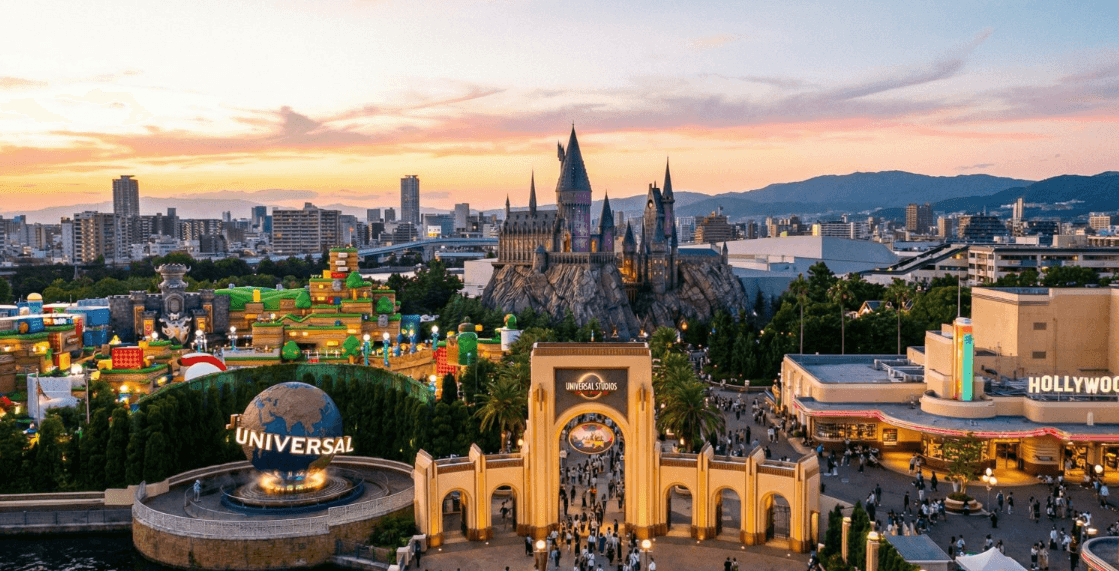

Universal Studios Japan is asking guests to sign a waiver before they walk into a haunted house. That single detail, buried in an otherwise breathless press release for Halloween Horror Nights 2026, is the most interesting thing the theme park industry has done with the Halloween season in years, because it quietly acknowledges something Universal has spent two decades tiptoeing around: the mass-market haunted house has a ceiling, and Osaka has decided to build a room above it.
The attraction is called Afterimage, it is rated R18, it costs an additional ¥1,900 (about $12.30), and it is open only to guests eighteen and up who agree, in writing, that they know what they are getting into. The marketing copy is doing a lot of heavy lifting: guests are led through "a facility that studies nightmares," placed in scenarios "with no escape, such as isolation and confinement," and promised "an unprecedented experience of despair." Strip away the theatrics and what Universal is describing is a haunt that isolates and confines individual guests rather than herding a conga line past scare actors. That is a fundamentally different product.
Why the waiver is the story
Horror mazes at every Universal resort operate under an unspoken contract. Scare actors cannot touch you, you move through in a continuous stream, and the pacing is calibrated so that a nervous teenager and a jaded enthusiast both exit in roughly the same emotional state. It works because it has to scale. Halloween Horror Nights in Orlando and Hollywood pushes tens of thousands of people through a handful of houses a night, and throughput is the entire business model.
Isolation and confinement break that model on purpose. You cannot confine a guest and maintain a continuous line at the same time, which means Afterimage is almost certainly a low-capacity, timed, small-group or solo experience. The upcharge and the waiver are not gimmicks: they are the mechanisms that make a slow, intense attraction financially and legally viable. Universal is effectively spinning off a boutique horror product from inside a mass-market event, and pricing it separately so the economics work.
The closest precedents are not other theme parks at all. They are the extreme haunt scene, the McKamey Manor-style attractions and immersive-theatre horror experiences that have always required waivers because they involve contact, restraint, and genuine psychological pressure. Those operate on the fringe, one-off and often controversial. What is notable here is a company the size of NBCUniversal deciding there is a mainstream, ticketed version of that appetite worth serving, and building it inside the safest brand-managed environment on earth.
Fifteen years of a very different event
It helps to remember that Halloween Horror Nights means something different in Osaka than it does in Florida. This is the fifteenth year of the event at Universal Studios Japan, and unlike the separately-ticketed after-hours affairs in the United States, HHN in Japan runs all day and is baked into regular admission. The horror is layered onto the operating park rather than replacing it after dark, which changes the whole rhythm of the thing.
The centerpiece of that layering is Street Zombies, and 2026 fields the largest horde the event has ever staged. From 6 p.m. to park close, zombies flood the purple zones on the park map, and the local flavor is the fun part: many wear school sport uniforms, a field day gone wrong, and while some carry the obligatory chainsaw, others swing tennis rackets, baseball bats, and skateboards. There is also Zombie de Dance, a recurring performance set to King Gnu's "SO BAD" and a medley pulling in Ado's "Uta" and Sandaime J SOUL BROTHERS, with the final show of each night reaching back for "legendary songs from the past" to mark the fifteen-year anniversary. It is a specifically Japanese kind of horror event, as much street festival and pop concert as it is fright, and Afterimage sits at the opposite pole of the same lineup.
The rest of the lineup, and where Afterimage fits
The other headline house is Resident Evil Requiem: The Dive, which drops guests into levels from the most recent Resident Evil game and, crucially, is included with admission. Universal Studios Japan has a long, productive relationship with Capcom's franchise, and a maze built around a just-released title is exactly the kind of synergy the Osaka park does better than anyone. Zombies also turn up inside the Factory of Fear: Zombie Tour house, so the walking dead motif runs from the streets straight through the maze roster.
Set that lineup side by side and the strategy is obvious:
| Attraction | Access | Intensity |
|---|---|---|
| Street Zombies / Zombie de Dance | Included, evenings | Crowd-pleasing, all ages |
| Resident Evil Requiem: The Dive | Included | Standard maze |
| Factory of Fear: Zombie Tour | Included | Standard maze |
| Afterimage | ¥1,900 upcharge, R18, waiver | Extreme, adults only |
Universal is stratifying its own event. Families get the dancing zombies, gamers get Resident Evil, and the enthusiasts who have exhausted the ordinary scares get something that finally does not have to play to general audiences. That last group is the one Halloween Horror Nights has always struggled to satisfy, because the veteran who has walked forty mazes is looking for exactly the intensity that a mass-market house cannot legally or logistically deliver.
The risk is equally obvious. A haunt built on isolation and psychological pressure is a very different liability profile from a scare actor jumping out of a doorway, and the waiver is the clearest possible signal that Universal knows it. Whether Afterimage delivers genuine dread or merely dresses a conventional maze in ominous copy is the open question, and the description, for all its promised despair, stays carefully vague. We would treat the marketing with skepticism until the walkthroughs land.
A test balloon worth watching
All of this arrives while Universal Studios Japan is riding a wave. Nikkei has reported the park is preparing an expansion worth between 200 billion and 300 billion yen, roughly $1.26 billion to $1.88 billion, using a large site adjacent to the current footprint, on the back of visitation that has stayed stubbornly strong. That is not the posture of a park hedging its bets. It is a park with the confidence and the balance sheet to experiment, and Afterimage reads like exactly the sort of low-cost, high-signal experiment a healthy operator runs to see what its audience will pay for.
Halloween Horror Nights 2026 runs September 11 through November 8. The zombie horde will get the crowds and the anniversary nostalgia will get the applause, but the attraction to watch is the one you have to sign your name to enter. If a $12 adults-only haunt draws lines in Osaka, do not be surprised when the concept surfaces at Orlando or Hollywood, where the after-hours ticket model already primes guests to pay extra for exclusivity. The waiver, in other words, may turn out to be the most exportable idea of the entire season.