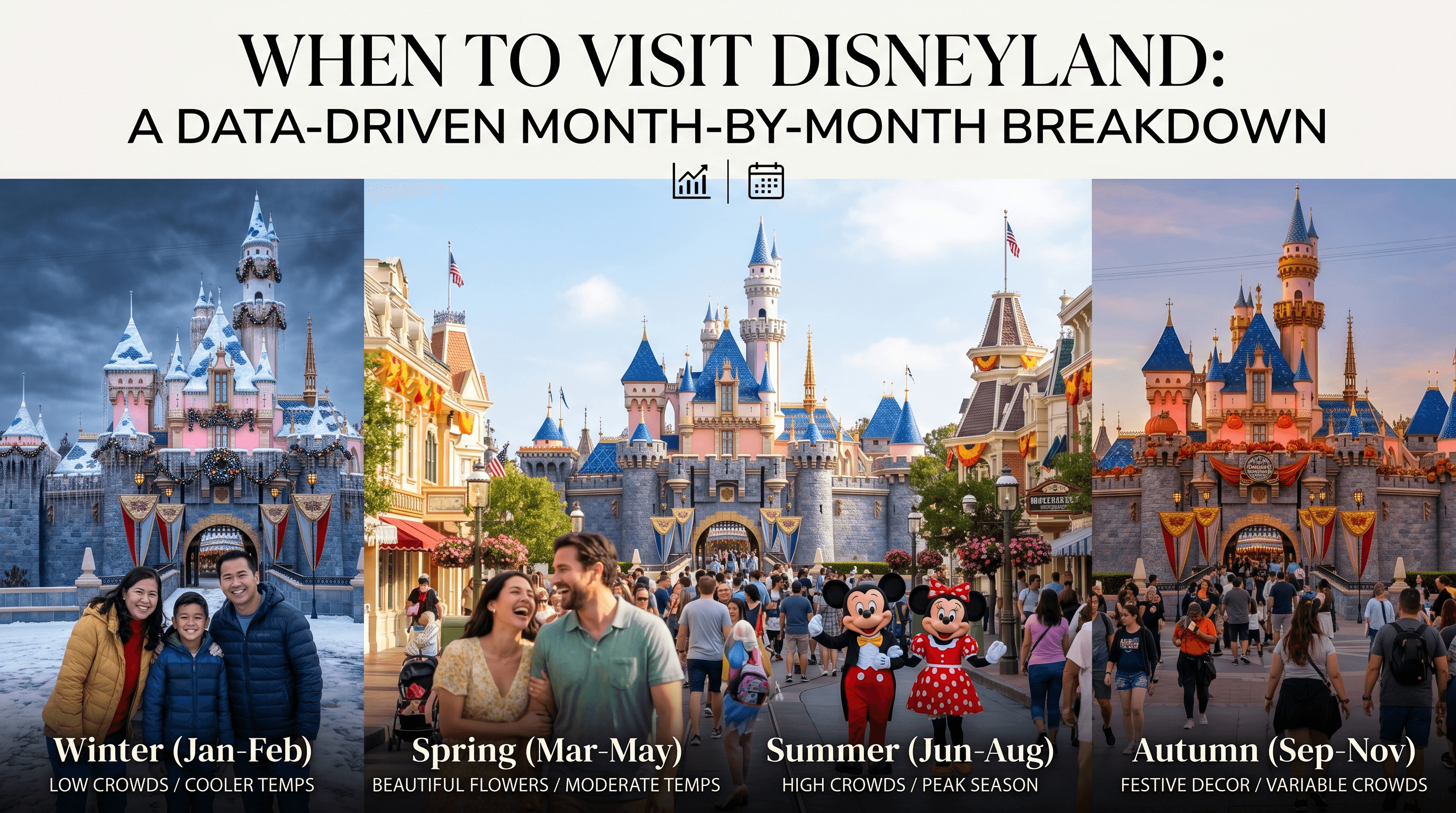

The Calendar Game Nobody Talks About
Everyone obsesses over how to visit Disneyland—FastPass strategies, rope drop tactics, optimal touring routes. But here's what actually moves the needle: when you go. The difference between visiting in December versus July isn't subtle. It's the difference between riding Haunted Mansion at 45 minutes wait versus 90 minutes. Between a $180 ticket and a $250 ticket. Between "this was magical" and "why did I spend $3,000 to stand in lines?"
I've tracked enough crowd patterns to know that the myth of "just go when you can" gets people crushed. Yes, any trip beats no trip. But if you have flexibility—and most planners do, even if they think they don't—the data matters. I've seen families with two weeks of scheduling flexibility pick the single worst window of the year because "August felt right." That's not a trip. That's a stress test.
The Tier System
Let me skip the month-by-month novelty rankings and give you what you actually need: three tiers.
Avoid (July, June, August early): Peak summer heat collides with peak vacation season. You're looking at 90+ degree temperatures, crowds that move like molasses, and premium pricing across the board. July especially gets hammered—families block out their entire summer budget for these weeks, and Disney prices accordingly. In July 2023, Indiana Jones Adventure was logging consistent 85-minute posted waits by 10 a.m. That's not a fluke. That's the baseline. Unless you're chasing specific 70th Anniversary events in 2026 that can't be replicated, skip it.
Fine (March, April, August late, January, February): Workable. Spring break and Easter weeks get busy in April—some years, Easter Sunday rivals a mid-July Saturday for sheer volume—but late April clears out remarkably fast once school resumes. January and February have President's Day and lingering New Year crowds to dodge, but otherwise sit in sweet-spot territory: manageable lines, lower prices, and genuinely cool weather that makes the afternoon slog bearable. One caveat on February: refurbishment season hits hard. In recent years, both Space Mountain and Pirates of the Caribbean have gone dark for extended stretches in late January through February. Always cross-check the refurb calendar before you commit.
Excellent (May, September, November early, December 1-20): This is where the math works. May hits after spring break clears but before summer families arrive—you get ideal weather, operational attractions, and crowds that feel almost respectful. September is basically an off-season; the parks go empty in a way that feels almost surreal. Halloween festivities start rolling in mid-September without the crush that builds through October. November before Thanksgiving is genuinely pleasant—locals treat it as their window, which tells you something. And early December? Peak magic without the Christmas week insanity. The castle lighting, the overlays, the entertainment package—all of it runs, without the December 26 mob scene.
The Real Play: September and Early December
If you're optimizing for the holy trinity of low crowds, good weather, and live entertainment, September is your move. Schools restart, summer vacation ends, and Disney clears out fast. A family I spoke with described walking onto Matterhorn Bobsleds in early September with a 10-minute wait—at noon on a Saturday. That doesn't happen in June. You'll actually experience attractions instead of treating the park like a line-standing simulator. The downside is lingering summer heat, particularly in the afternoons. But temperate evening hours after 5 p.m.? Completely manageable, and the park takes on a different energy once the heat breaks.
Early December (first three weeks) is the counter-intuitive gem. The decorations are universally acknowledged as the best of the year—Haunted Mansion's Nightmare Before Christmas overlay, the Main Street garlands, the snow effect on the castle. Crowds are real but manageable, especially on weekdays. Pricing actually resets lower than you'd expect for a festive period; Disney seems to treat it as a shoulder window before the holiday surge, which means you're getting the full Christmas aesthetic at something closer to a fall price point. Avoid December 20-31 completely—that's where every family with school-age kids and time off between holidays converges at once. Crowd levels in that window rival peak July. The decorations don't change, but your experience absolutely will.
The October/November Wildcard
October gets crowded because people want the Halloween atmosphere, and the atmosphere genuinely delivers—Oogie Boogie Bash alone draws a dedicated fanbase willing to pay event-night ticket premiums. But the general park crowds don't justify the hype for most visitors. You're paying October prices, navigating October crowds, and spending a meaningful chunk of your day in lines that have been artificially inflated by seasonal demand. If the Halloween-specific events are your primary goal, build your trip around them intentionally. If they're a bonus, September gives you the early rollout of the aesthetic without the October price tag or the crowds.
November is the better play for most people, and it's underrated. You trade autumn décor for Christmas décor—and that's not a downgrade. Thanksgiving week itself is busy enough to treat like a soft avoid, but mid-November through the Wednesday before Thanksgiving is genuinely pleasant. It sits between tiers because your mileage varies on holiday aesthetics and how firm your dates are, but if you can thread the needle on timing, it punches above its weight.
The Math You Need
Weather, crowds, pricing, and what's actually operating—four variables, and most people only optimize for one. They pick the week the whole family can go, check that the weather looks nice, book tickets, and call it planning. Then they get blindsided by a closed headliner or a crowd surge they didn't see coming because a local school district's spring break landed differently than expected.
The actual calculation is simple. If you can move your trip three weeks earlier or later, you potentially cut your average wait times in half, drop $50-100 per ticket depending on tier, and experience a park that feels staffed for the crowd level rather than overwhelmed by it. That's not a marginal improvement—that's a fundamentally different trip on the same budget.
Go when you can—sure. But go when you plan, and you'll actually have a trip worth remembering.